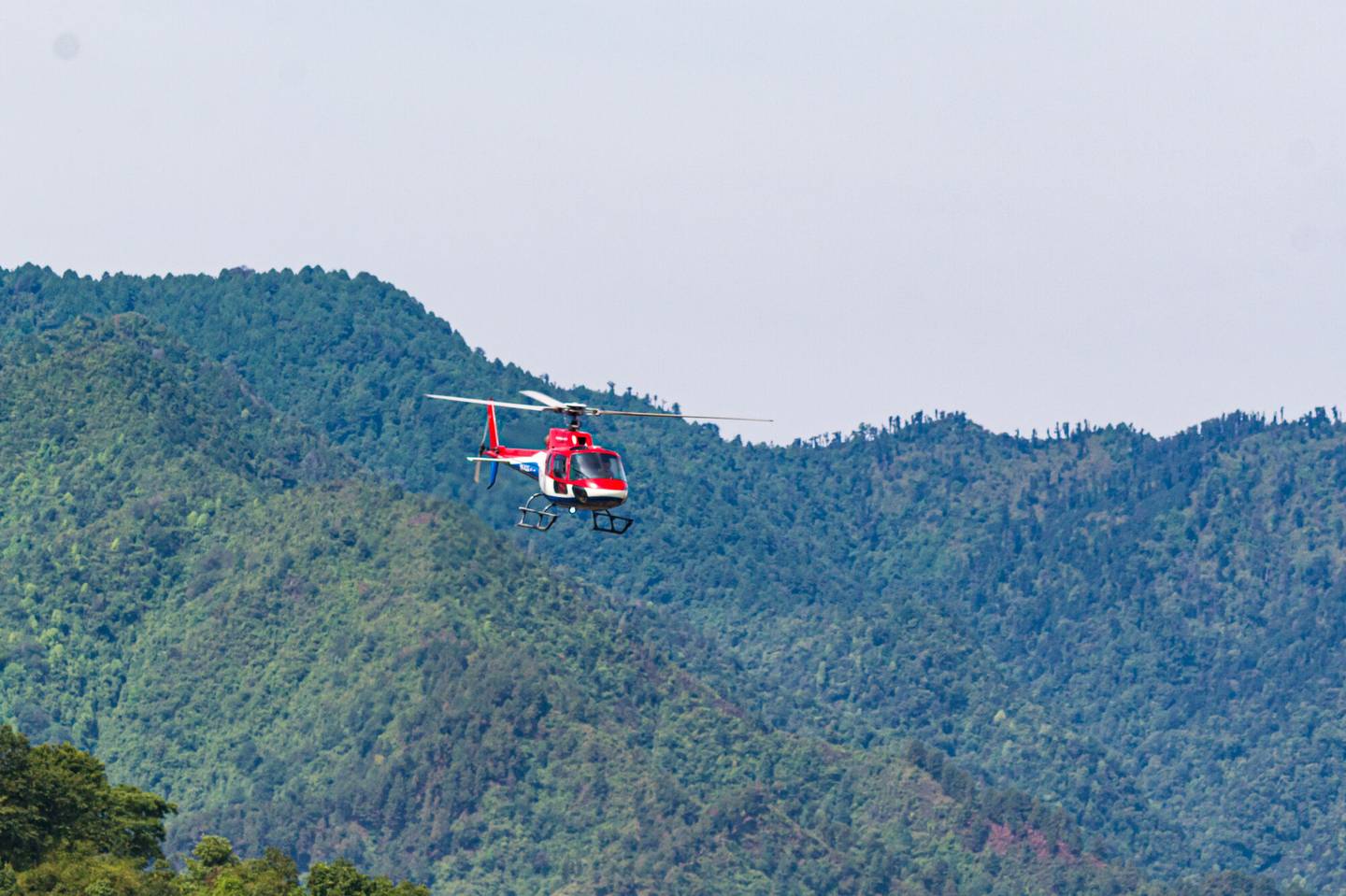

Four kinds of company stand between a passenger and a helicopter in Nepal, and only one of them holds the certificate that makes the flight lawful: the operator. The other three sell flights the operator flies. Kantipur reported in June 2024 that there were twelve helicopter companies in Nepal, with 33 helicopters between them, much of the flying starting from Kathmandu, 1,338 m above sea level.
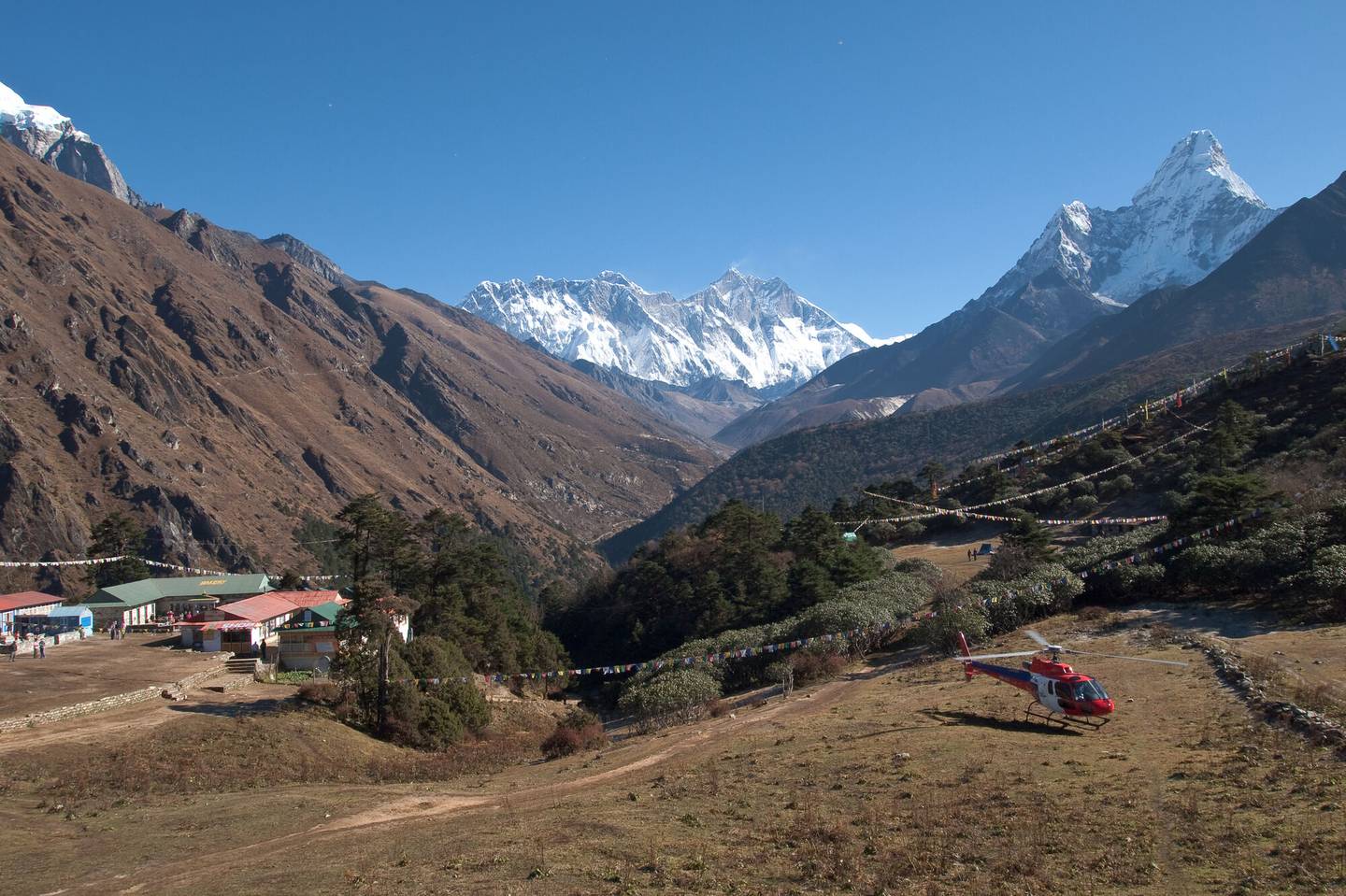
The company on a booking confirmation is often not the company whose pilot turns up. Most of this flying ends in the Khumbu, at Tenzing–Hillary Airport in Lukla at 2,845 m, or on the landing sites above it. What follows is how the market is organised, and how to check that the company at the end of it is allowed to fly. Which operator is best is a different question, and no published fleet list answers it.
Who holds the certificate and actually flies the aircraft?
The operator. It is the only one of the four that can lawfully carry you for money.
An operator holds an Air Operator Certificate issued by the Civil Aviation Authority of Nepal. It owns or leases the aircraft, employs the pilots and the engineers, and carries the passenger liability cover. Its name belongs on the invoice.
Nepal's National Aviation Safety Plan for 2023 to 2025, the country's filing with ICAO, records 21 air operator certificates issued in Nepal, five of them for international commercial air transport. Most of the helicopter companies sit inside the remainder; one, Shree Airlines, holds both kinds of work.
Certification is a floor rather than a grade. Every certified operator meets the same one, so the certificate tells you the flight is lawful and tells you nothing about which company to pick.
One decision never moves, whoever sold you the seat. Whether to fly, delay or turn back belongs to the pilot in command.
What does a trekking agency add when it sells a helicopter flight?
An itinerary. The flying itself is bought from a certified operator on the agency's own commercial terms.
A trekking or travel agency sells the helicopter as one line in a package: permits, lodges, guides, porters and a flight out. It holds no certificate and owns no aircraft.
This is the oldest shape in the Nepali market and still the usual one for a trek exit. The agency already has your dates and your group, and the aircraft is something it buys on the morning it needs one.
The consequence is that you are two contracts away from the machine. Ask which operator is flying, and ask whether the agency was quoted an hourly rate or a fixed sector price, because it knows and you are paying for whichever it was.
What does a booking marketplace do that an operator does not?
It puts one request to several certified operators and brings the quotes back. It flies nothing.
Go Heli Nepal is this kind of company: it owns no aircraft, employs no pilots and holds no Air Operator Certificate, and a booking becomes a contract with whichever operator accepts the request.
The model is newer than the agency one and still arriving. The Kathmandu Post reported on 28 May 2026 that a Nepali ride-hailing app had added helicopter booking in partnership with one certified operator, which moves seats in this market onto a consumer app rather than behind a desk.
What a marketplace changes is which operators you reach, not what you are buying. The aircraft, the crew, the certificate and the liability cover stay with the operator.
Which company sends a helicopter when the passenger cannot ask for one?
The assistance company named in a travel insurance policy, acting for the insurer.
A medical evacuation in Nepal is usually arranged by that company rather than by the patient or the patient's group. It holds no certificate either: it tasks an operator, agrees the terms and settles against the policy.
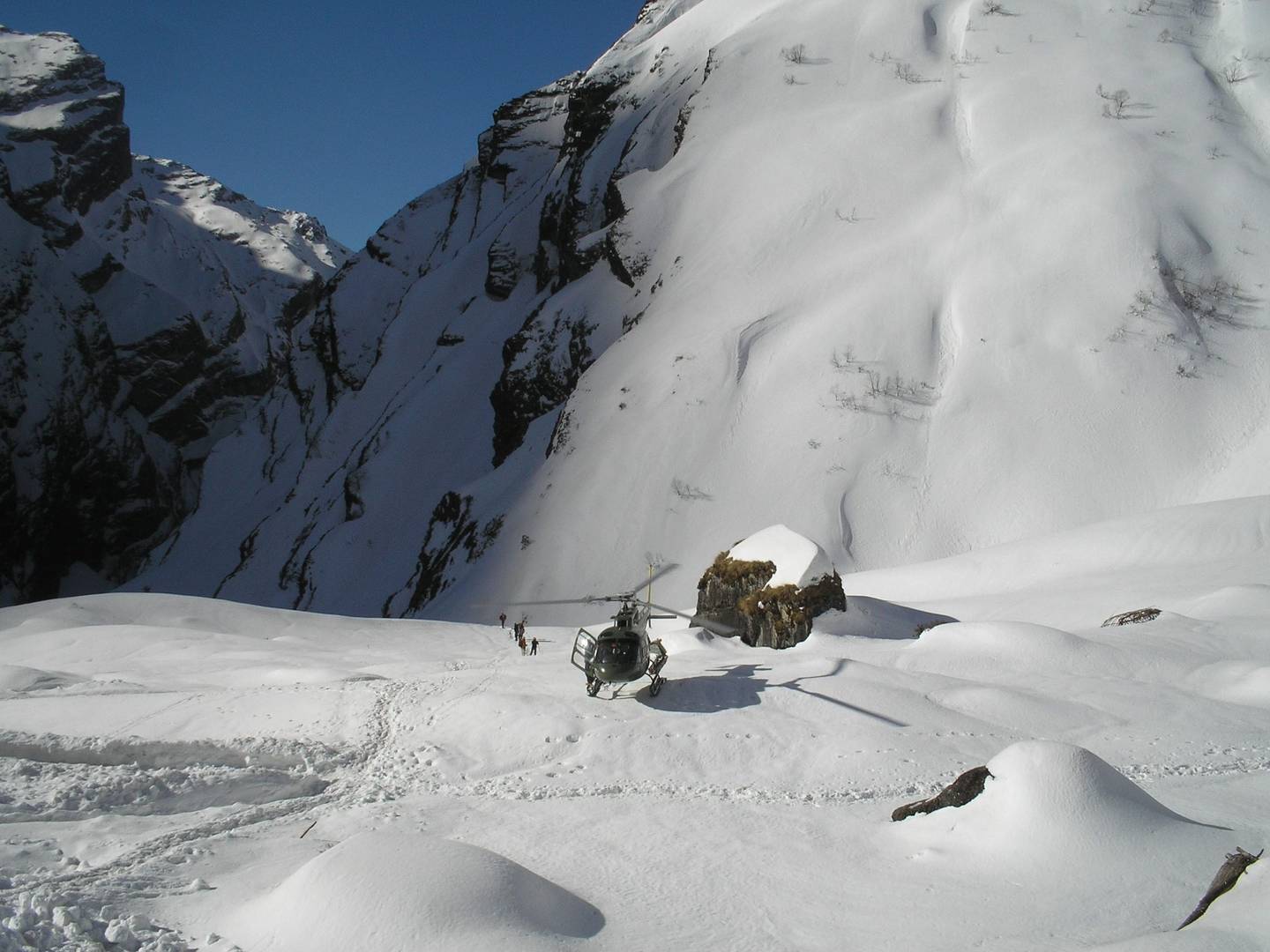
It is the kind of company travellers meet least often and need most. The operator it tasks is one of the same twelve that fly tourists — the fleet does not change when the purpose does.
How do you check a helicopter company in Nepal is legitimate?
Ask which company holds the certificate, then check that the answer and the invoice name the same company.
Start with the question most websites do not answer: which operator's Air Operator Certificate does this flight run under? A seller who cannot name one in a sentence has not asked.
Then treat the certificate as a live status rather than a permanent badge. The Himalayan Times has reported the Civil Aviation Authority of Nepal suspending a helicopter operator's certificate after a fatal accident, and has separately reported it grounding another operator's helicopter flights outright. In each case the company had been flying lawfully the week before.
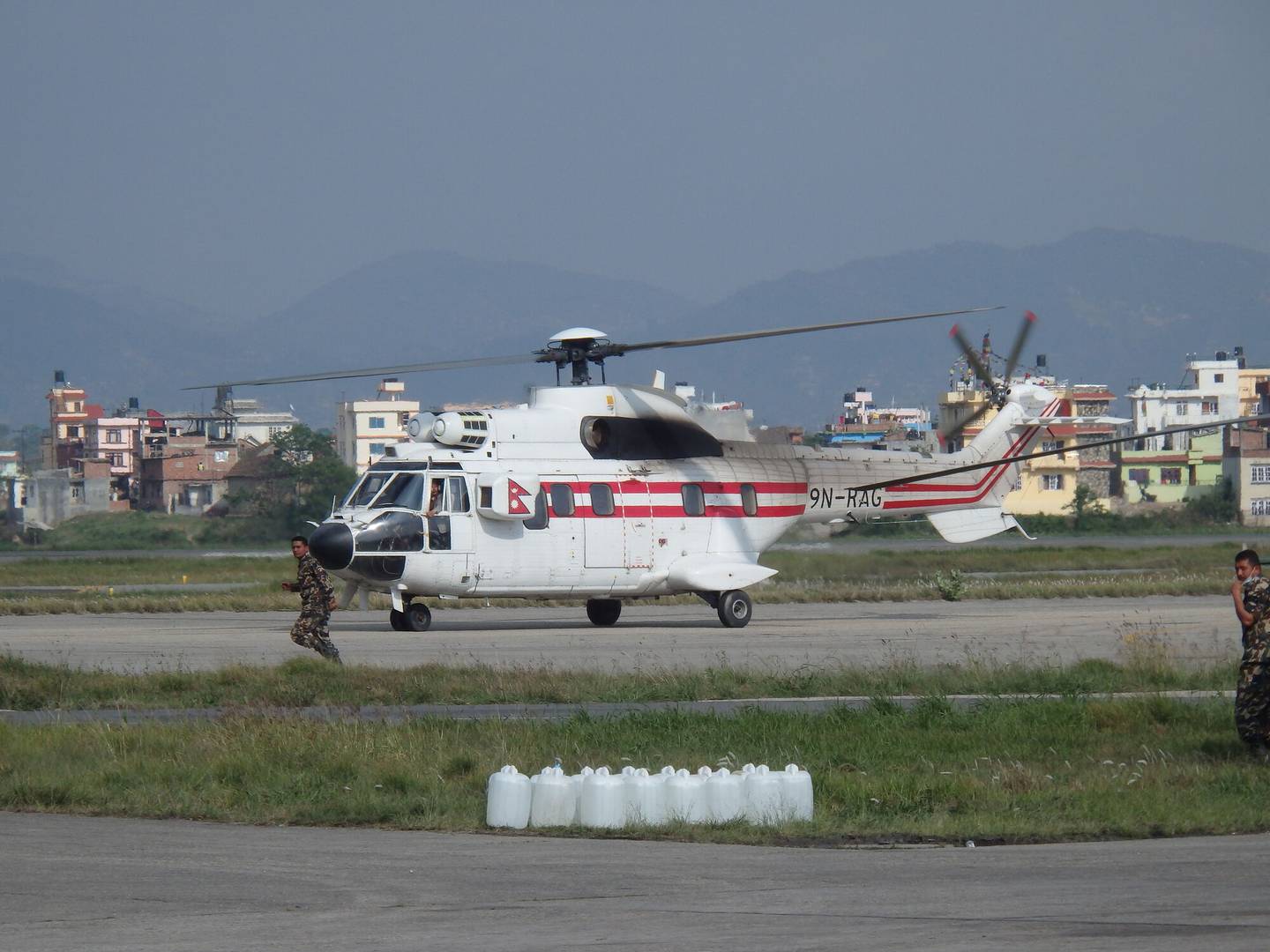
Ask for the aircraft registration. Nepali civil aircraft carry a 9N- prefix, and a registration you can read on the fuselage ties your flight to one machine on one operator's certificate rather than to a company name on a website.
Then read the invoice. The operator's name on it means the contract is with the operator. A seller's name on it means the contract is with the seller, and the operator is somebody they bought from.
What none of this establishes is which operator is safer. That turns on maintenance, crew experience and weather discipline, and no public register in Nepal publishes a comparison.
These are questions to ask at the enquiry, which is the first of the three stages a booking passes through; our guide to how to book helicopter flights in Nepal covers the sequence itself and what each stage asks of you.
| Ask | A usable answer | Why it matters |
|---|---|---|
| Which company holds the certificate? | A named operator | Only that company can fly you |
| Is it current? | Checked, not assumed | A certificate can be suspended |
| What is the aircraft registration? | A 9N- mark | Ties the flight to one machine |
| Whose name is on the invoice? | The operator's | That is who the contract binds |
| Hourly or a fixed sector price? | One or the other, stated | It decides who pays for a delay |
None of these questions needs a document produced. All five can be answered in a sentence, and a seller who answers none of them is the signal.
Why does the choice between Nepali helicopter companies change less than you expect?
Because almost all of them fly the same aircraft.
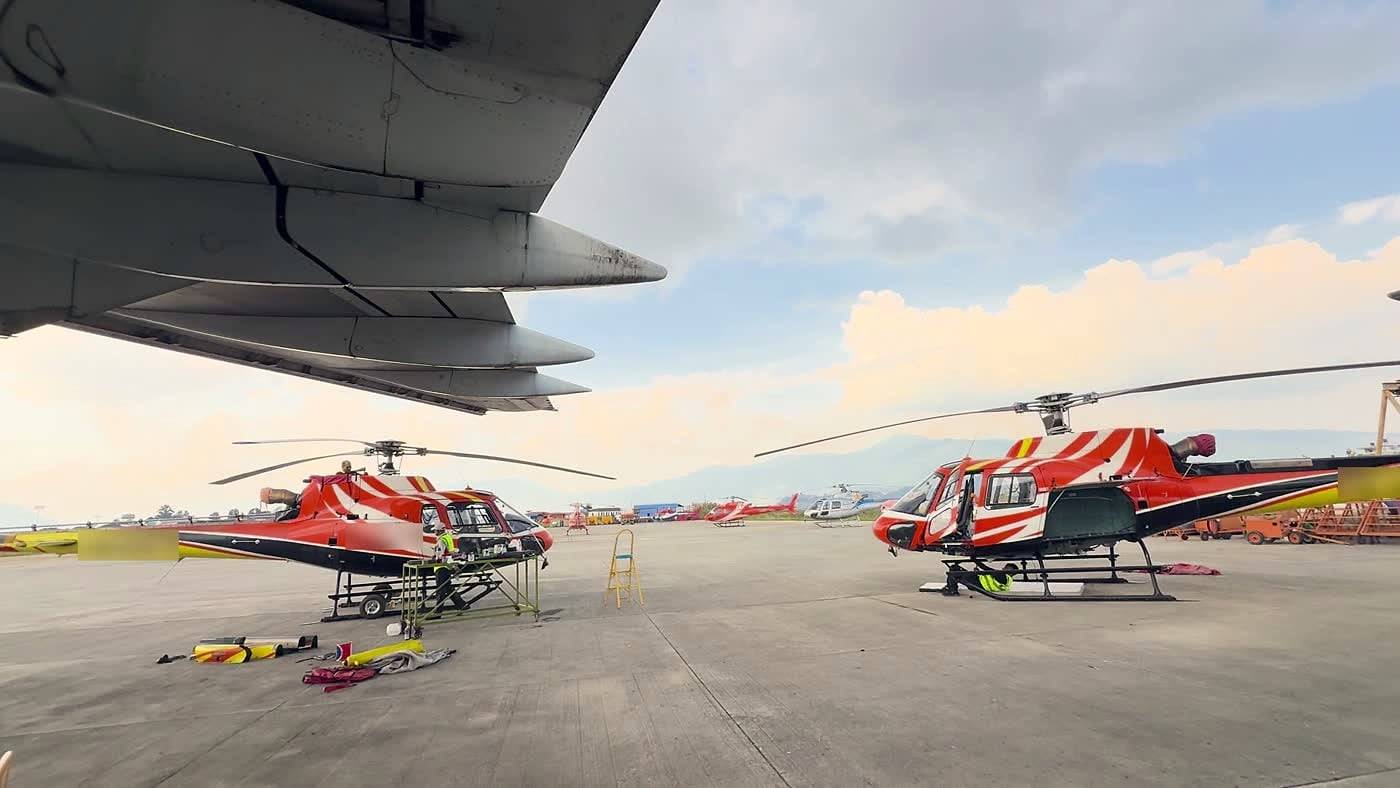
The Nepali tourist helicopter fleet is built around one type family. Airbus announced in April 2017 that Nepali operators, the army among them, had flown 50,000 hours on the H125. Aviation Nepal reported in 2018 that every helicopter company but one was operating Écureuil-family machines, and a Nepal News feature in July 2025 listed the main types as the H125, the Bell 407GXP, the Bell 206L LongRanger and the Robinson R66. Heavier Mi-17s also fly, so the pattern is strong but not absolute.
So the differences between Nepali helicopter companies are commercial rather than technical. Where the aircraft is parked on your morning, how many spare machines the company has, how quickly the desk answers, and what the quote already covers: those move. The lift available over the Khumbu does not.
That is worth carrying into a comparison, because it inverts the usual instinct. A longer fleet list is not a better aircraft — it is a better chance that one is free, and a better chance of a replacement when one goes unserviceable.
| Factor | Varies between operators? |
|---|---|
| Aircraft type | Rarely — most fly the Écureuil family |
| Certificate | No — the same CAAN floor |
| Fleet size | Yes — from a single aircraft upward |
| Where the aircraft starts your day | Yes, and it drives the price |
| Who decides whether to fly | No — always the pilot in command |
Is the number of helicopter companies in Nepal about to fall?
If the new fleet minimum holds, the arithmetic points that way.
Republica reported in February 2024 that, once the Supreme Court had upheld the revised Air Operator Certificate Requirements, operators could start with three aircraft but must add two more within five years, and could not fly wet-leased machines.
The Kathmandu Post reported that the Air Service Management Regulation published in the Nepal Gazette on 21 April 2025 sets paid-up capital for domestic helicopter companies at Rs 500 million, against Rs 750 million for domestic fixed-wing operators.
ch-aviation reported the fleet floor as a February 2029 deadline for Nepal's domestic airlines, with the regulator's stated reason that a single-aircraft operator has no backup in an emergency, and with merger offered as the alternative to buying aircraft.
Now the arithmetic, which is a forecast rather than a rule. Twelve companies at five aircraft each is sixty aircraft, against 33 helicopters counted by Kantipur in June 2024 and more than 40 in a Nepal News feature of July 2025. Unless the fleet grows by half or more, the number of companies is likely to fall — by merger, by acquisition, or by certificates lapsing.
For a passenger that cuts both ways, and the trade is worth seeing before it happens. Fewer and larger operators means more spare aircraft on the morning one breaks. It also means fewer independent quotes on a busy October morning, which is when competition does the most work on the price.
What are you actually contracting for?
An aircraft and a crew for a period of time, on one of two billing bases, under the operator's certificate.
Charter in Nepal is billed either by the hour of block time or as a fixed price for a named sector. Block time runs from engine start to engine stop, so it is always longer than the flying time a route page advertises.
Many operators also set a daily minimum, so ask what it is, because an aircraft committed to your morning cannot be sold to anybody else. On a short sector it is the minimum rather than the rate that sets the bill.
Positioning is in the price whether you ride it or not. A one-way transfer is one leg for you and two or more for the machine, and it is the largest single reason two certified operators quote differently for an identical journey.
Who absorbs a weather hold follows from the billing basis. Under an hourly quote the extra minutes are yours. Under a fixed sector price the total is already agreed and a long day is the operator's cost.
All of it rests on the certificate. The aircraft, the crew, the Air Operator Certificate and the passenger liability cover belong to the operator, not to whoever sold you the flight — and that is the one thing worth confirming before any of the rest is negotiated.
Questions this article answers
How many helicopter companies are there in Nepal?
Kantipur reported in June 2024 that twelve helicopter companies were operating in Nepal, with 33 helicopters between them; a later Nepal News feature put the national fleet above 40 aircraft across the same twelve companies. Much of the flying starts from Kathmandu. The regulator is pushing that count down: the revised Air Operator Certificate Requirements give each operator until February 2029 to reach a fleet of at least five aircraft, and ch-aviation reports merger as the stated alternative to buying aircraft.
How can I check that a Nepali helicopter company is allowed to fly?
Ask which company holds the Air Operator Certificate the flight runs under, and check that the same company's name appears on the invoice. The certificate is issued by the Civil Aviation Authority of Nepal and it is a live status rather than a permanent badge — the Himalayan Times has reported the authority suspending one helicopter operator's certificate after a fatal accident, and separately grounding another operator's helicopter flights outright. Asking for the aircraft registration, which carries a 9N- prefix on Nepali civil aircraft, ties the booking to a specific machine rather than to a company name on a website.
Is the company that sells a helicopter flight in Nepal the company that flies it?
The company that sells a helicopter flight in Nepal is often not the company that flies it. Four kinds of company operate in this market and only one of them, the certified operator, owns the aircraft and employs the crew; trekking agencies, booking marketplaces and the assistance companies behind travel insurance policies all sell or arrange flights that a certified operator performs. The contract for the flight, the passenger liability cover and the decision whether to fly all belong to the operator. That is why the operator's name on the invoice is worth checking before the day.
Do helicopter companies in Nepal fly different types of helicopter?
Helicopter companies in Nepal mostly fly the same type, the Écureuil family of AS350 and H125. Aviation Nepal reported in 2018 that every helicopter company but one was operating Écureuil-family machines, and a Nepal News feature in July 2025 listed the main types as the H125, the Bell 407GXP, the Bell 206L LongRanger and the Robinson R66. Heavier Mi-17s also fly in the country, so the pattern is strong but not absolute. The practical effect is that choosing between Nepali helicopter companies is a commercial choice about availability, positioning and service rather than a technical choice about aircraft.
What happens to a Nepali helicopter operator that does not reach five aircraft?
A Nepali helicopter operator that does not reach five aircraft by the deadline risks losing its Air Operator Certificate unless it merges. The revised Air Operator Certificate Requirements, upheld by the Supreme Court and applied from February 2024, let an operator start with three aircraft and add two within five years. Separately, the Air Service Management Regulation of April 2025 sets paid-up capital for helicopter companies at Rs 500 million. ch-aviation reported the fleet floor for Nepal's domestic airlines as a February 2029 deadline, with the regulator citing the lack of backup available to a single-aircraft operator and offering merger as the alternative to expansion.