

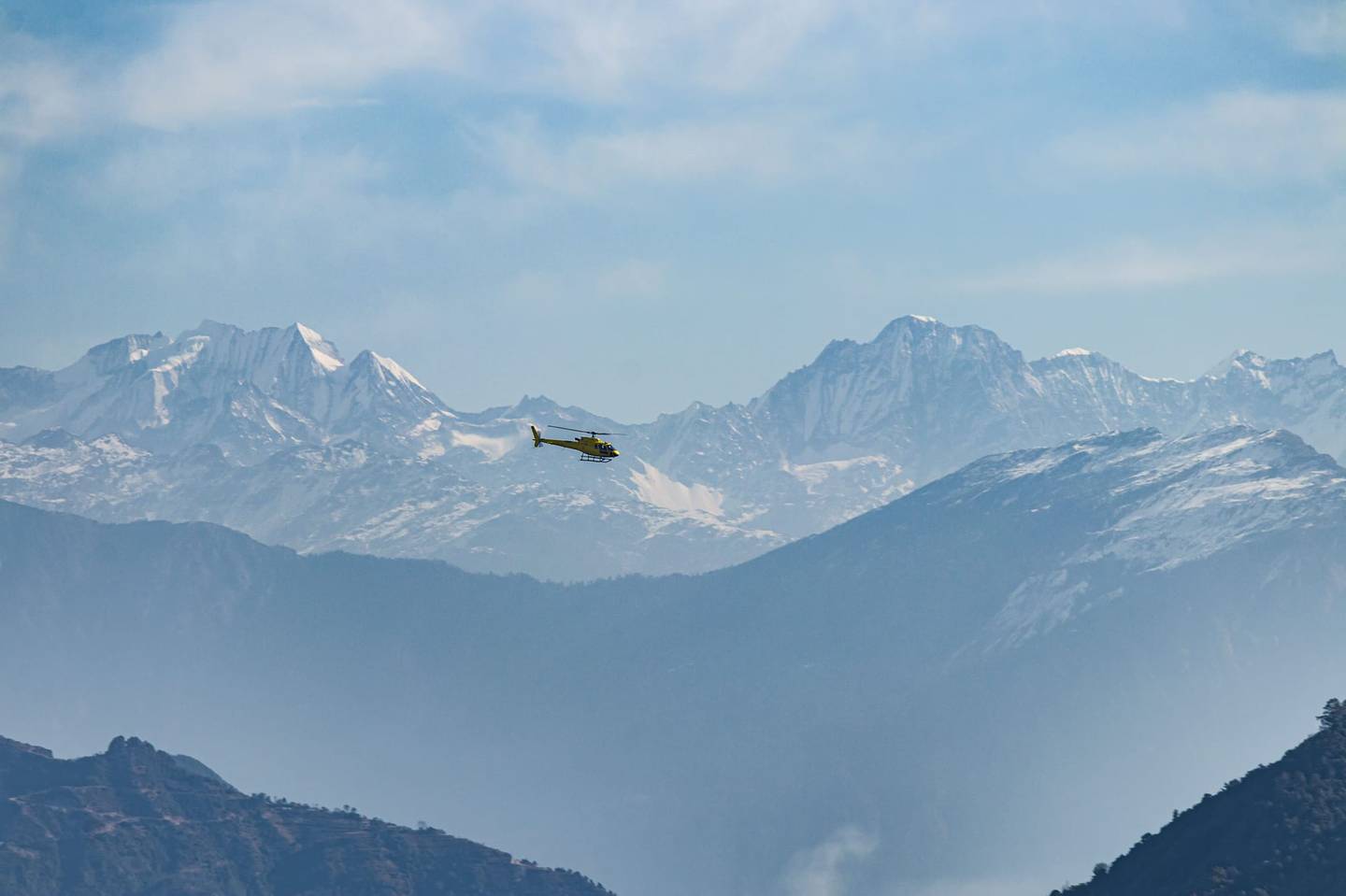
How far is it, and how long in the air?
Pick any two landing sites in Nepal. The distance comes from their surveyed positions, and the time in the air from the published cruise speed of every helicopter that can be booked.
- Landing sites
- 18
- Legs we sell
- 8
- Longest sold leg
- 239 km
Two landing sites, four numbers.
Where each figure comes from.
Two of the numbers are measurements and two are estimates. The difference matters if you are planning a connection.
Distance is measured
The great-circle line between the surveyed position of each landing site. A helicopter here flies the valley, not the line, so treat every distance as the shortest the leg can be, never as the track flown.
Air time is estimated
From each aircraft’s published cruise speed in still air, across the fleet that can reach the far end. It leaves out the climb, the wind, any hold and every minute on the ground.
Neither is what you are billed
A charter is quoted against block time, engine start to engine stop. That adds start-up, the climb, any hold for weather and the time on the helipad. It is always the larger number.
At altitude, weight usually decides who flies. The payload planner works out how many of your party an aircraft can lift to a helipad, and the altitude tool shows what the air is doing there.
The journeys operators quote on.
Shortest first. Each leg links to its charter page, where we compare every licensed operator that flies it.
| Leg | Distance | Time in the air | Climb |
|---|---|---|---|
| Pokhara to Annapurna Base Camp | 38 km21 nm | 10–11 minutes | +3,303 m+10,838 ft |
| Kathmandu to Gosaikunda | 43 km23 nm | 12 minutes | +3,042 m+9,980 ft |
| Kathmandu to Kyanjin Gompa | 61 km33 nm | 16–17 minutes | +2,532 m+8,307 ft |
| Pokhara to Muktinath | 69 km37 nm | 18–20 minutes | +2,883 m+9,460 ft |
| Pokhara to Lo Manthang | 109 km59 nm | 29–30 minutes | +2,983 m+9,788 ft |
| Lukla to Kathmandu | 135 km73 nm | 35–38 minutes | −1,507 m−4,944 ft |
| Kathmandu to Kala Patthar | 148 km80 nm | 39–41 minutes | +4,207 m+13,802 ft |
| Kathmandu to Pathibhara Temple | 239 km129 nm | 62–66 minutes | +2,456 m+8,057 ft |
Distance and time, answered.
How is the distance between two landing sites calculated?
It is the great-circle distance, the shortest line over the surface of the earth, computed from the surveyed latitude and longitude of each landing site. It is not a road distance and it is not the track a helicopter flies: in the Khumbu and the Kali Gandaki an aircraft follows the valley, so the flown distance is longer than the straight line by a margin that depends on the weather and the route.
Is the flight time shown the time a helicopter charter is quoted at?
No. Time in the air is distance divided by the aircraft's published cruise speed in still air. A quote is against block time, which adds the start-up, the climb, any hold for weather or traffic, and the minutes on the ground at each end. On a Himalayan leg the difference between the two is routinely fifteen minutes or more.
Why does a helicopter flight time show as a range rather than one number?
Because the aircraft decides it. Cruise speeds across the fleet flying in Nepal differ by roughly a third, so the same leg takes noticeably longer in the slowest airframe than in the fastest. The range is bounded by the slowest and fastest aircraft that can currently be booked, and the aircraft you are offered depends on your party's weight and the altitude of the landing site.
Can a helicopter fly to a Himalayan helipad and back without refuelling?
It depends on the airframe and the leg. Fuel is available at only a handful of Nepali airfields, so on most legs the aircraft carries the round trip with it: the published still-air range has to cover twice the distance before a reserve is even set aside. The calculator counts the aircraft that clear that bar for the leg you pick.
Does altitude change how long a helicopter flight takes?
Altitude costs more in payload than in time. Climbing to a Himalayan helipad adds a few minutes to a leg, but the thinner air cuts what the aircraft can lift by hundreds of kilograms, which is why a five-seat helicopter is a two- or three-seat helicopter at Kala Patthar. Weight, not time, is what usually decides whether a party flies together.
The rest of the plan.
Each answers one question before you ask for a price. All free, no account needed.
Payload planner
Your party's weights against a helipad's altitude — which helicopter types can lift you there, and how many of you can go at once.
Altitude and oxygen
How high every landing site is, in feet and metres, and how much of the oxygen at sea level is left in each breath up there.
Cost per person
Seats or the whole helicopter, priced against your headcount at published fares, with the party size where the two swap over.
Season calendar
Month by month, which flights are published as in season and how often that month's mornings are lost to cloud.
Evacuation reach
For before you trek: which helicopter bases can reach where you will be, how long the flying is, and the least it could cost.
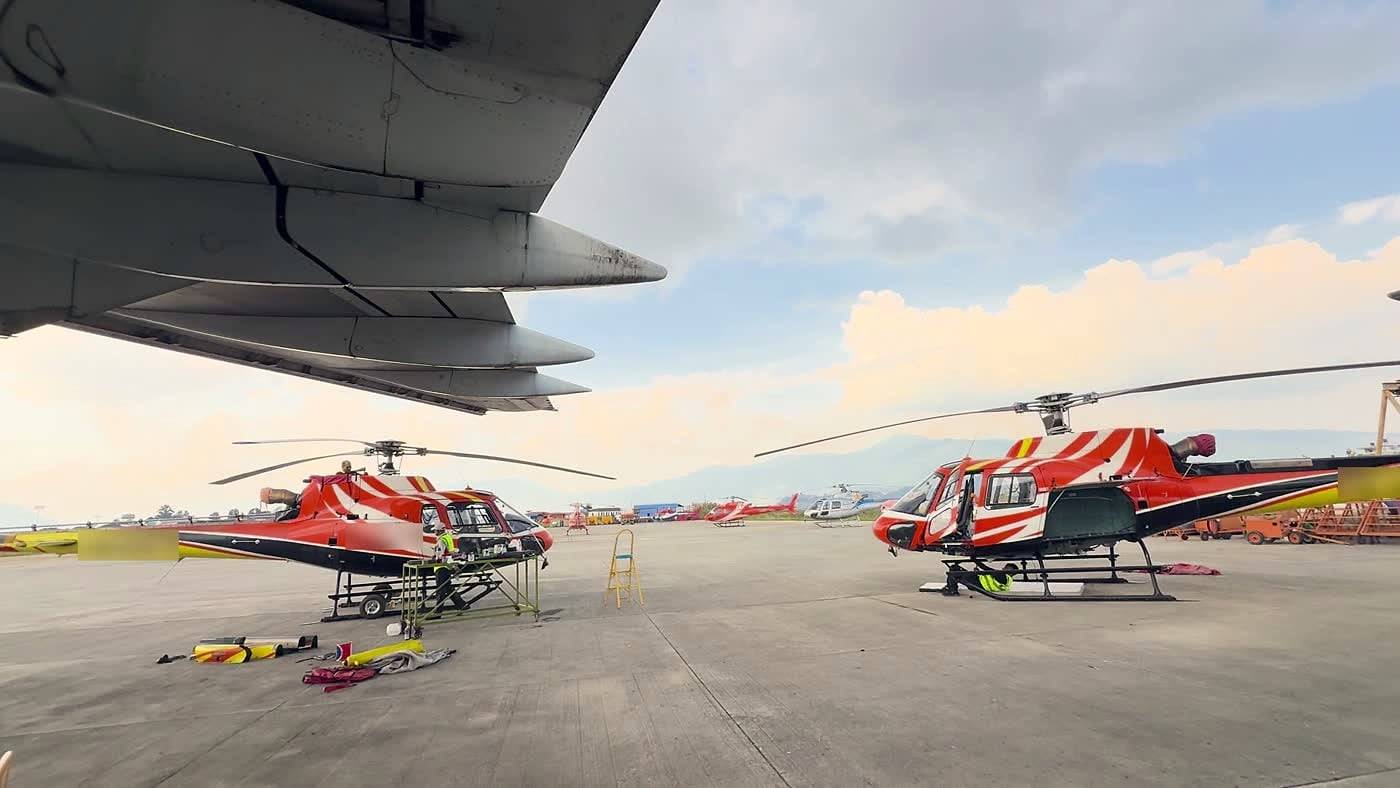
Send the date. We do the comparing.
Tell the desk the leg, the date and who is flying. We ask every licensed operator that flies it and book you the cheapest, aiming to reply within four hours.