

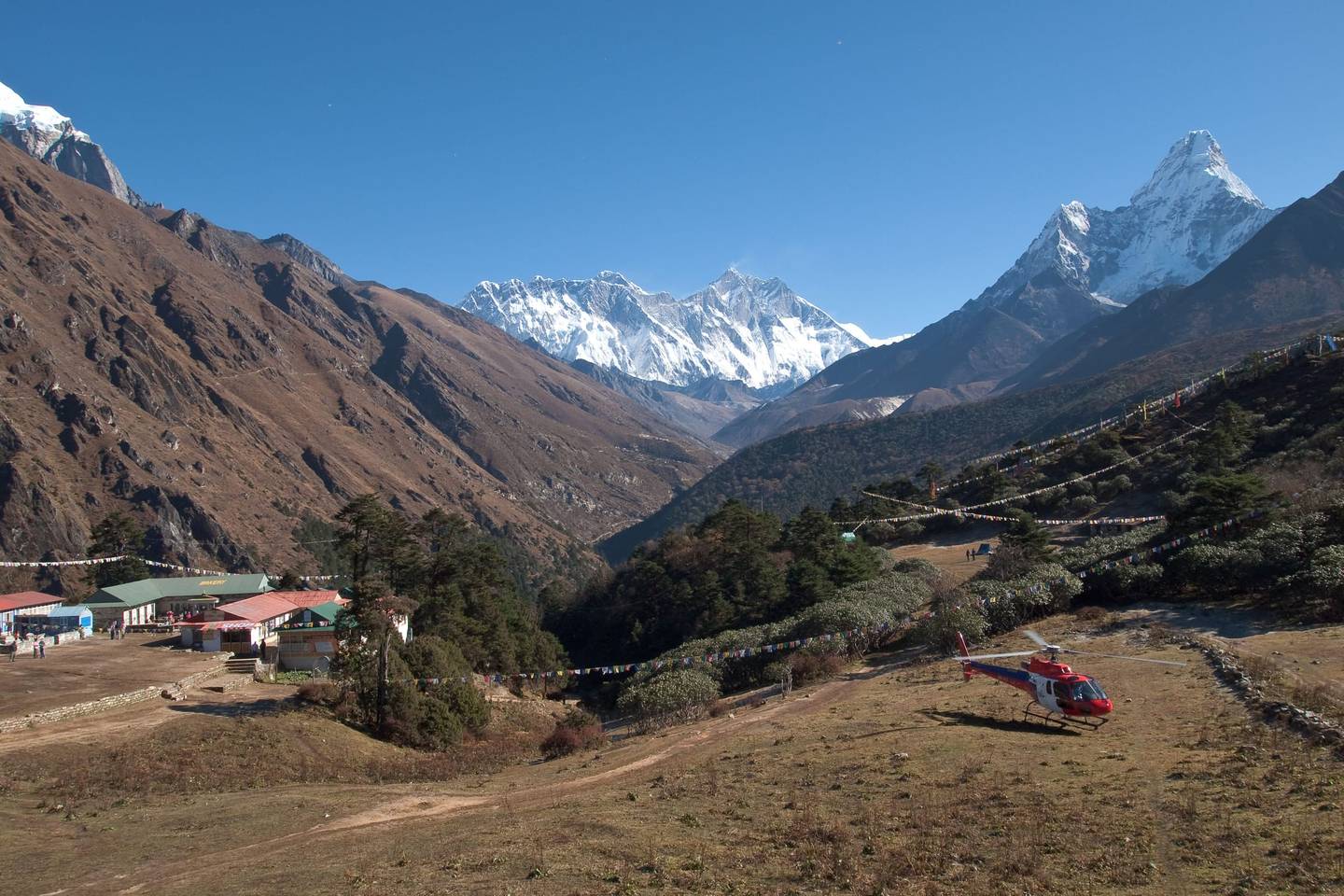
If it goes wrong up there, who comes?
A planning tool for before you go: which helicopter bases can reach where you are trekking, how long the flying is, and the least that flying could cost, to set against the evacuation cap on your policy.
- Landing sites to check
- 18
- Helicopter bases
- 2
- Rescue desk
- 24 hours
Where you will be, who can reach it.
Call +977 98 6104 4994
A floor, not a bill.
The figures are the flying alone. Two clauses in your policy decide whether any of it is covered.
Reach and flying time
Each base is measured to your landing site in a straight line, and the time in the air comes from the published cruise speed of the aircraft kept there. Daylight and an open valley are on top.
The altitude limit
Many standard policies stop covering trekking above 4,000 m, which is below Everest Base Camp. It is usually a separate clause from the evacuation benefit and voids it entirely. How that exclusion works.
The evacuation cap
Compare the cap with the floor here plus the medical crew, any extraction, the operator’s minimum and the hospital handling. Who pays for an evacuation, and when.
Reach, timing and cover.
How long does a helicopter rescue take in Nepal?
The flying is usually about an hour or less each way from the nearest base: Kathmandu to Lukla is about 45 minutes in the air, and to the upper Khumbu about an hour. The wait is almost never the flying. An evacuation is coordinated by voice, needs daylight, and launches only when the valley is open, so a casualty at altitude on a closed afternoon waits for the next morning rather than for an aircraft.
Can a helicopter fly a rescue in Nepal at night?
Assume not. Mountain evacuation in Nepal is flown in daylight and in visual conditions, so an incident in the late afternoon is frequently a first-light departure the following day. That is the single biggest reason to carry the means to keep somebody warm and stable overnight above the road head.
Is the cost shown here what an evacuation will be billed at?
No. It is a floor: the flying alone, out and back, at an indicative published hourly rate. A real invoice adds the medical crew, any longline extraction, the operator's daily minimum, hospital handling and any repositioning. Treat the figure as the least the flying could cost, and read the rescue cost guide for how the billing actually works.
Does travel insurance cover a helicopter evacuation in Nepal?
Often less than people assume. Some standard policies exclude trekking above 4,000 m, which is below Everest Base Camp, or cap helicopter evacuation well below what one costs. Check the altitude limit and the evacuation cap as two separate clauses, and compare the cap against the flying figure on this page before you decide it is enough.
Do I need to arrange payment before a helicopter will come?
Usually not cash, but do not count on nothing being asked. Operators usually fly on the medical need, and most ask for your insurer's assistance number or a guarantee of payment before or soon after launch, so call the assistance line on your policy as soon as you can. If the insurer will not guarantee the flight, the operator may ask you or your family to. That is why the policy wording matters more than the balance in your account.
The rest of the plan.
Each answers one question before you ask for a price. All free, no account needed.
Flight time and distance
Any two landing sites in Nepal: the straight-line distance, the time in the air, and whether the flight needs a fuel stop.
Payload planner
Your party's weights against a helipad's altitude — which helicopter types can lift you there, and how many of you can go at once.
Altitude and oxygen
How high every landing site is, in feet and metres, and how much of the oxygen at sea level is left in each breath up there.
Cost per person
Seats or the whole helicopter, priced against your headcount at published fares, with the party size where the two swap over.
Season calendar
Month by month, which flights are published as in season and how often that month's mornings are lost to cloud.
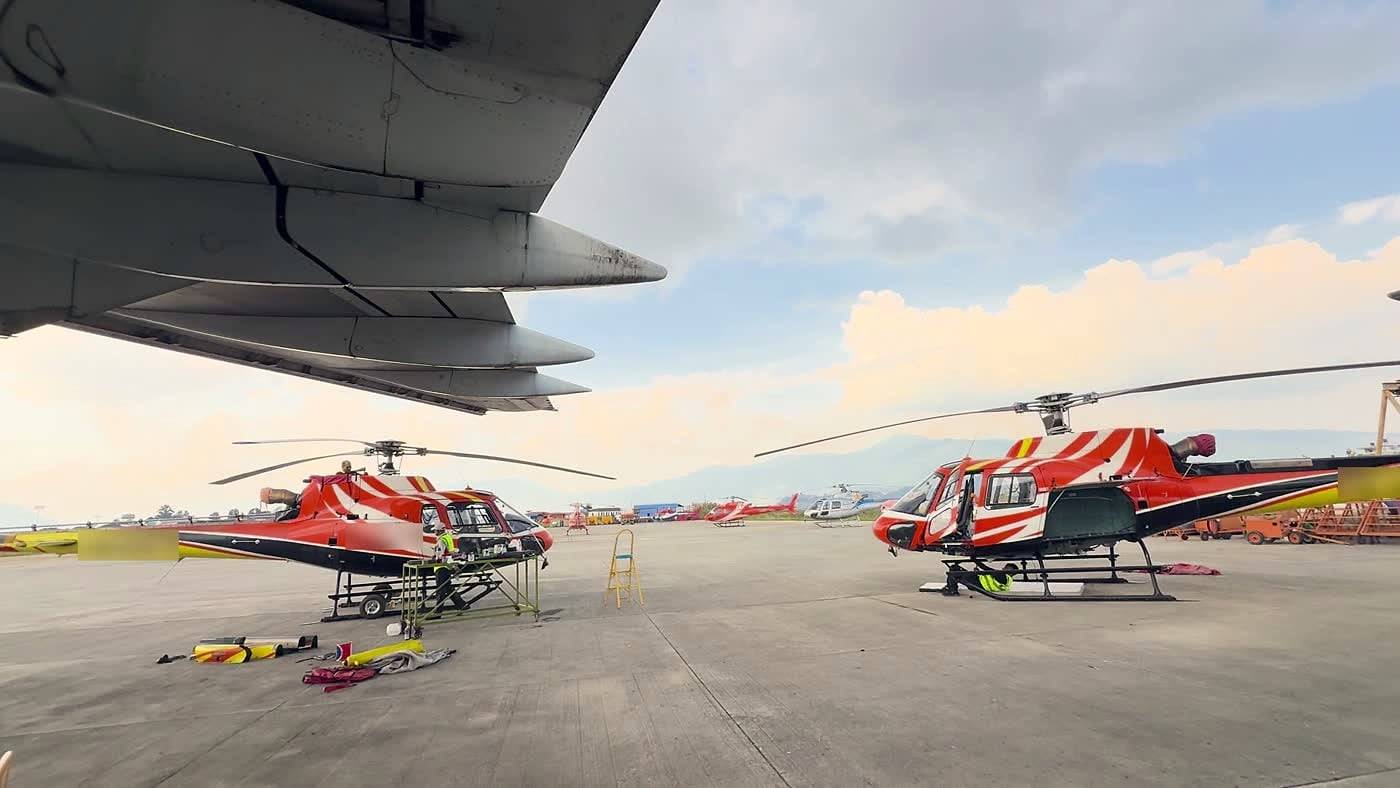
Ask the rescue desk before you go.
The desk knows which operators keep crews on call for which regions, and what they will and will not fly into. It is staffed around the clock, and a question asked before the trek costs nothing.