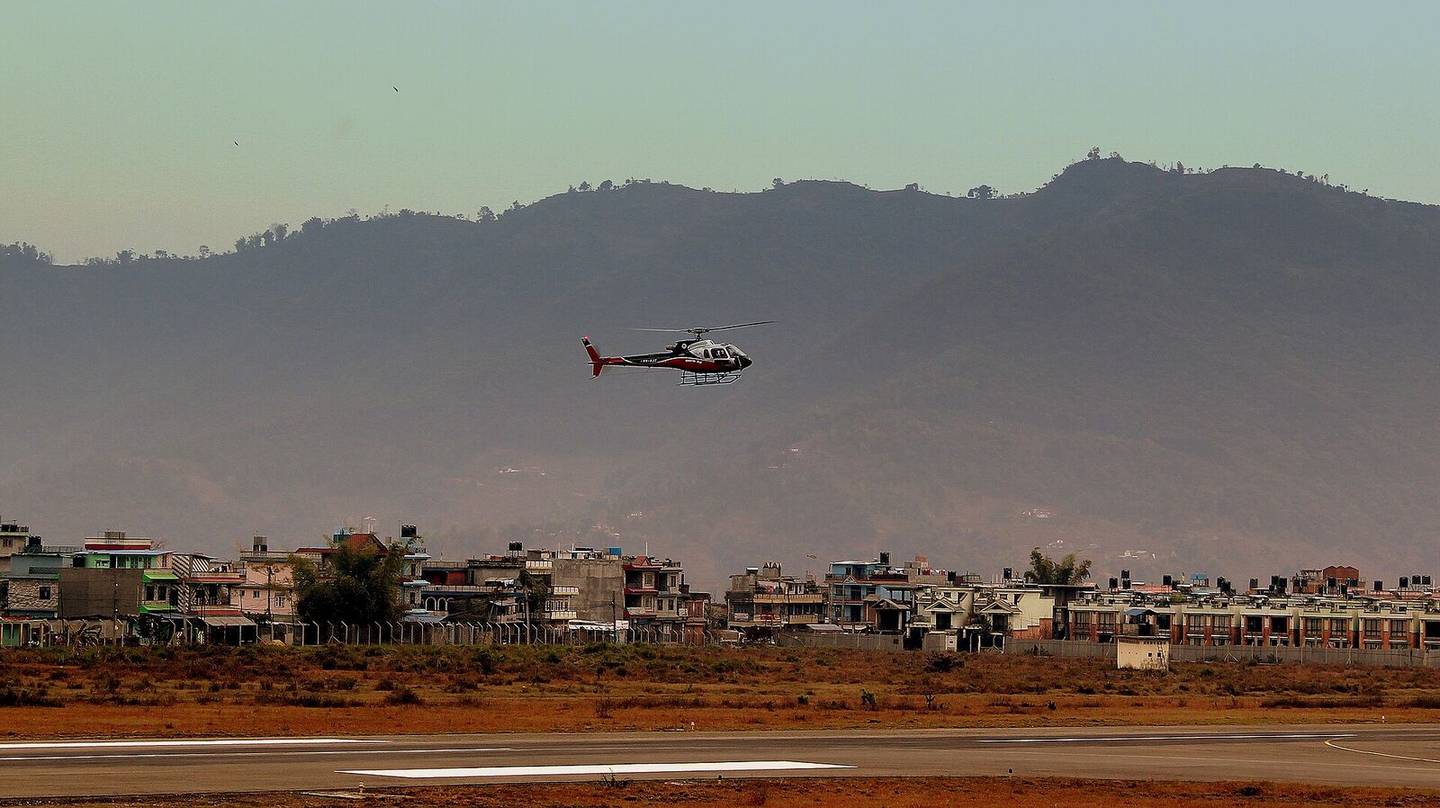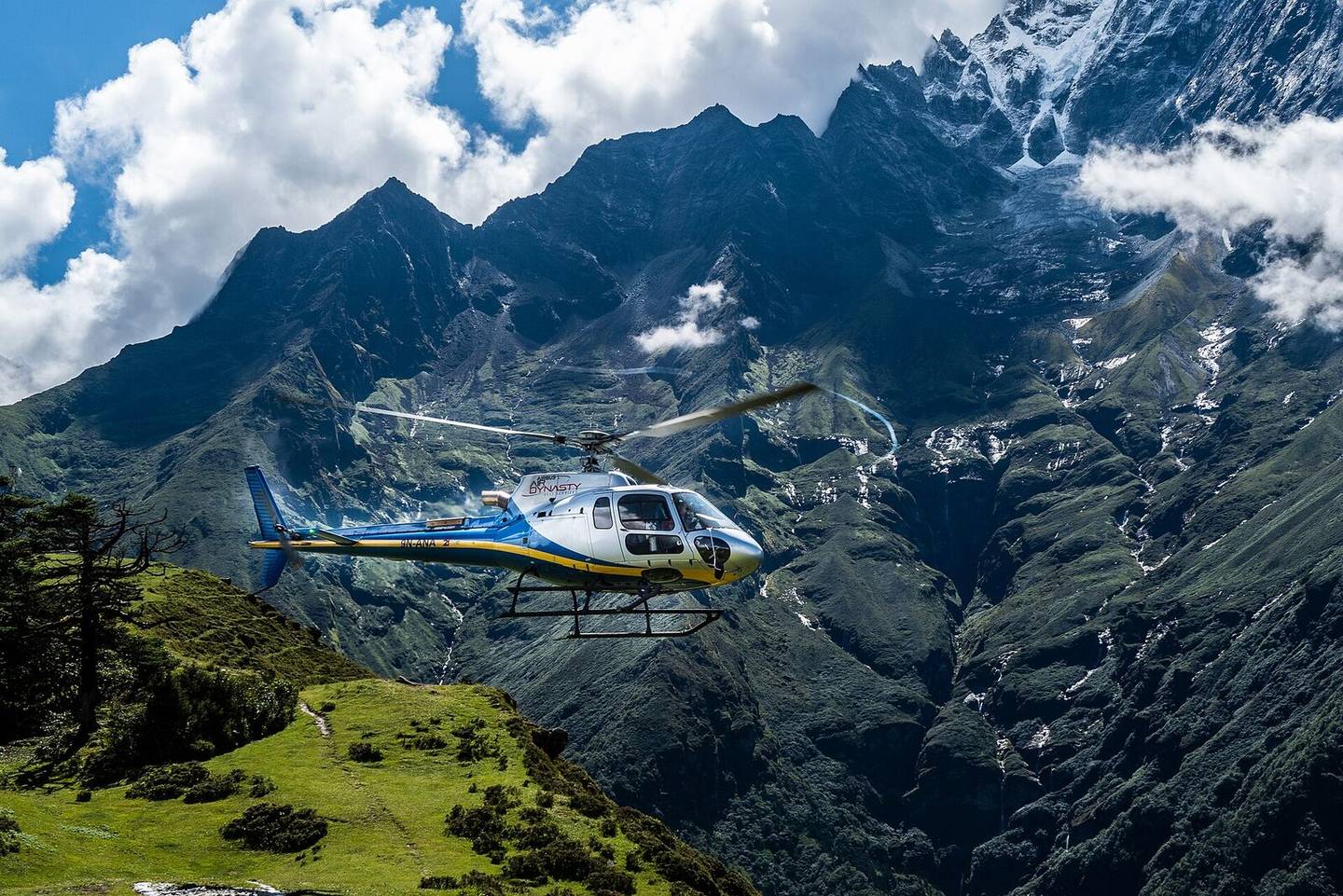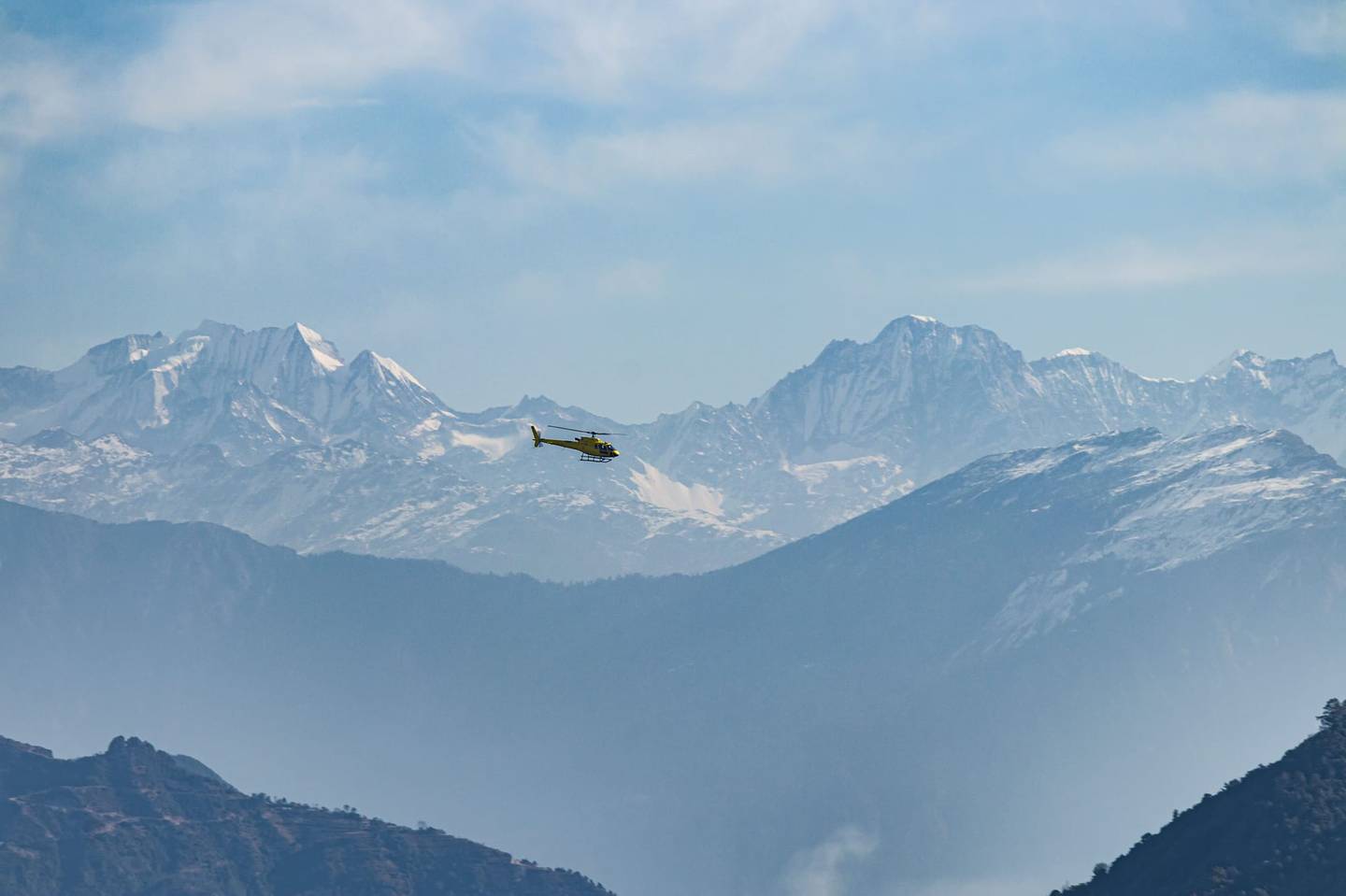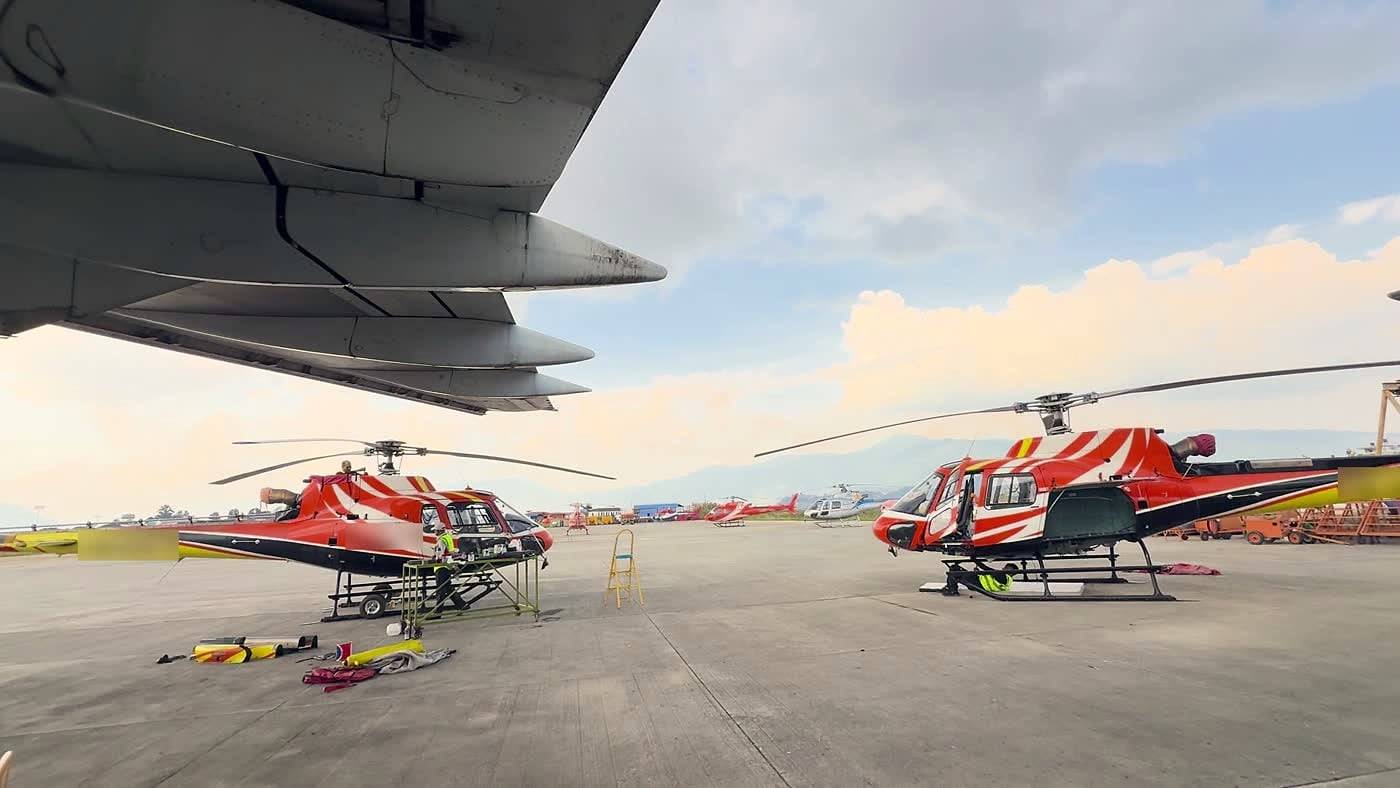

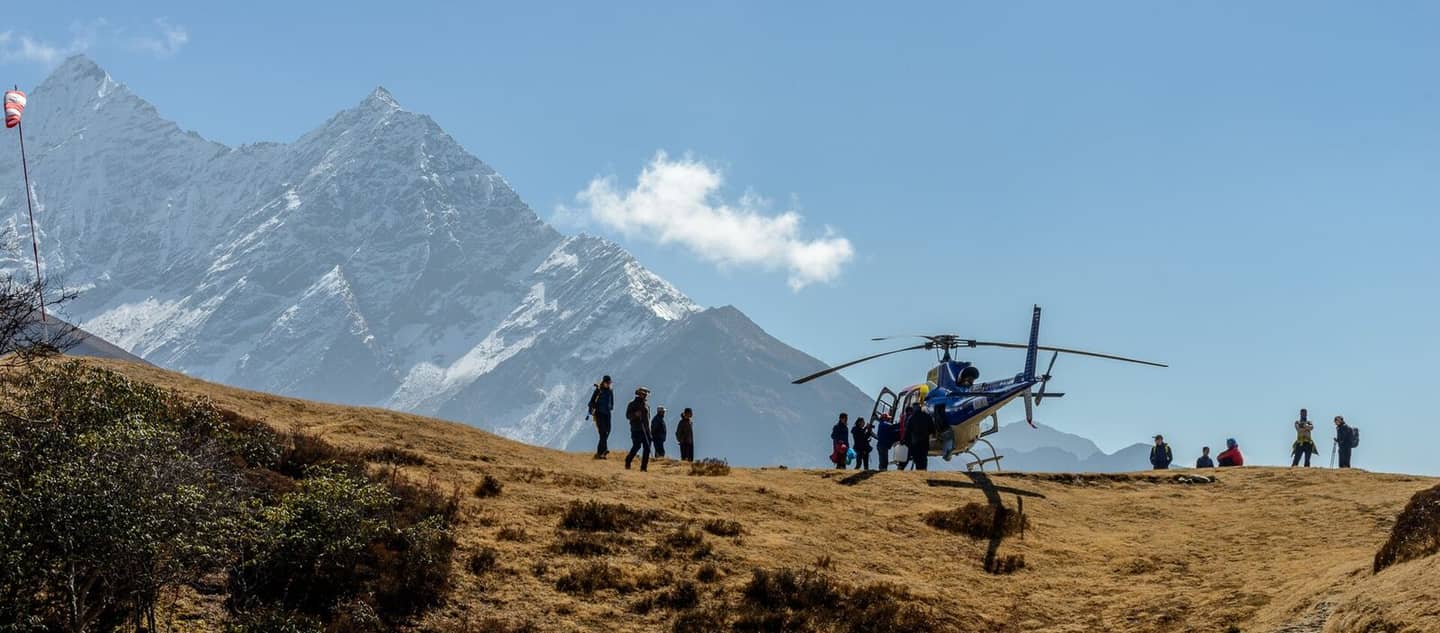
Descent is the key treatment for serious altitude sickness, and in Nepal a helicopter is sometimes the fastest way to get it. It is also the part of a trek most travellers understand least until they need it. If somebody is unwell right now, start here rather than reading on.
Helicopter rescues on Mount Everest are the ones that get filmed, but the flying that matters most is lower and far more common: a trekker with worsening altitude sickness somewhere between Namche Bazaar and Everest Base Camp, moved to a hospital in Kathmandu inside a morning.
How do you call for a helicopter rescue in Nepal?
Rescue is coordinated by voice: you, your guide or your lodge calls your insurer's assistance line, which assesses the case and, if it agrees, arranges a licensed operator. In a life-threatening emergency, call the police as well. Email is the wrong channel — nobody is watching an inbox at 04:00.
If you are travelling independently, carry the operator's number written down, not only in an app that needs signal.
How high can a rescue helicopter actually reach?
Rescue landings are made up to about 6,400 m, at Everest's Camp 2, in a lightened aircraft on a good day. Above that, and often well below it, hover-loading or longline extraction becomes the only option. That requires specific crews and equipment, and not every operator has them.
Descending on foot even a few hundred metres often turns an impossible retrieval into a straightforward one.
Which insurance clause stops a rescue being paid for?
Some policies exclude helicopter evacuation, set a limit below the real cost of a high-altitude retrieval, or exclude trekking above a stated altitude that can be below Everest Base Camp. Many cover medical evacuation but exclude search and rescue.
Read the altitude limit and the evacuation cap before you leave home, and carry proof of cover with you.
Who pays for the flight, and when?
Operators usually fly on the medical need, but most ask for your insurer's assistance number or a guarantee of payment before or soon after launch. Call the assistance line on your policy as soon as you can — before the flight if there is time. The operator then bills your insurer, and if your policy does not cover the evacuation the bill lands on you, which is the clause worth reading before you leave home.
A rescue flight is never guaranteed: darkness, cloud and wind decide whether one can launch. In an emergency, also call Nepal Tourist Police on 1144, Police on 100 or Ambulance on 102.
Questions this article answers
Who dispatches a helicopter rescue in Nepal?
A helicopter rescue in Nepal is coordinated by voice: you, your guide or your lodge calls your insurer's assistance line, which assesses the case and, if it agrees, arranges a licensed operator; in a life-threatening emergency, call the police as well. Email is the wrong channel because nobody is watching an inbox at 04:00. If you are trekking independently, carry the operator's number written on paper rather than only in an app that needs signal.
Can a helicopter land to rescue someone above 6,000 m?
Landings have been made at about 6,400 m at Everest's Camp 2, a record, in a lightened aircraft on a good day; above that only a longline with a specialist crew may be possible, and it is never guaranteed. Those require specific crews and equipment that not every Nepali operator has. Descending even a few hundred metres on foot often turns an impossible retrieval into a straightforward one, which is why casualties are moved downhill wherever it is safe to do so.
Do you have to pay for a helicopter rescue before the flight?
A helicopter rescue in Nepal usually does not have to be paid for in cash before the flight, but expect to be asked for something. Operators usually fly on the medical need, and most ask for your insurer's assistance number or a guarantee of payment before or soon after launch, so call the assistance line on your policy as soon as you can. If your policy does not cover the evacuation, the bill lands on you.
Does travel insurance cover helicopter rescue in Nepal?
Travel insurance often does not cover helicopter rescue in Nepal, or not fully. Some policies exclude helicopter evacuation, set a limit far below the real cost, or exclude trekking above a stated altitude that can be below Everest Base Camp at 5,364 m. Read the altitude limit and the evacuation cap before leaving home, and carry proof of cover.