
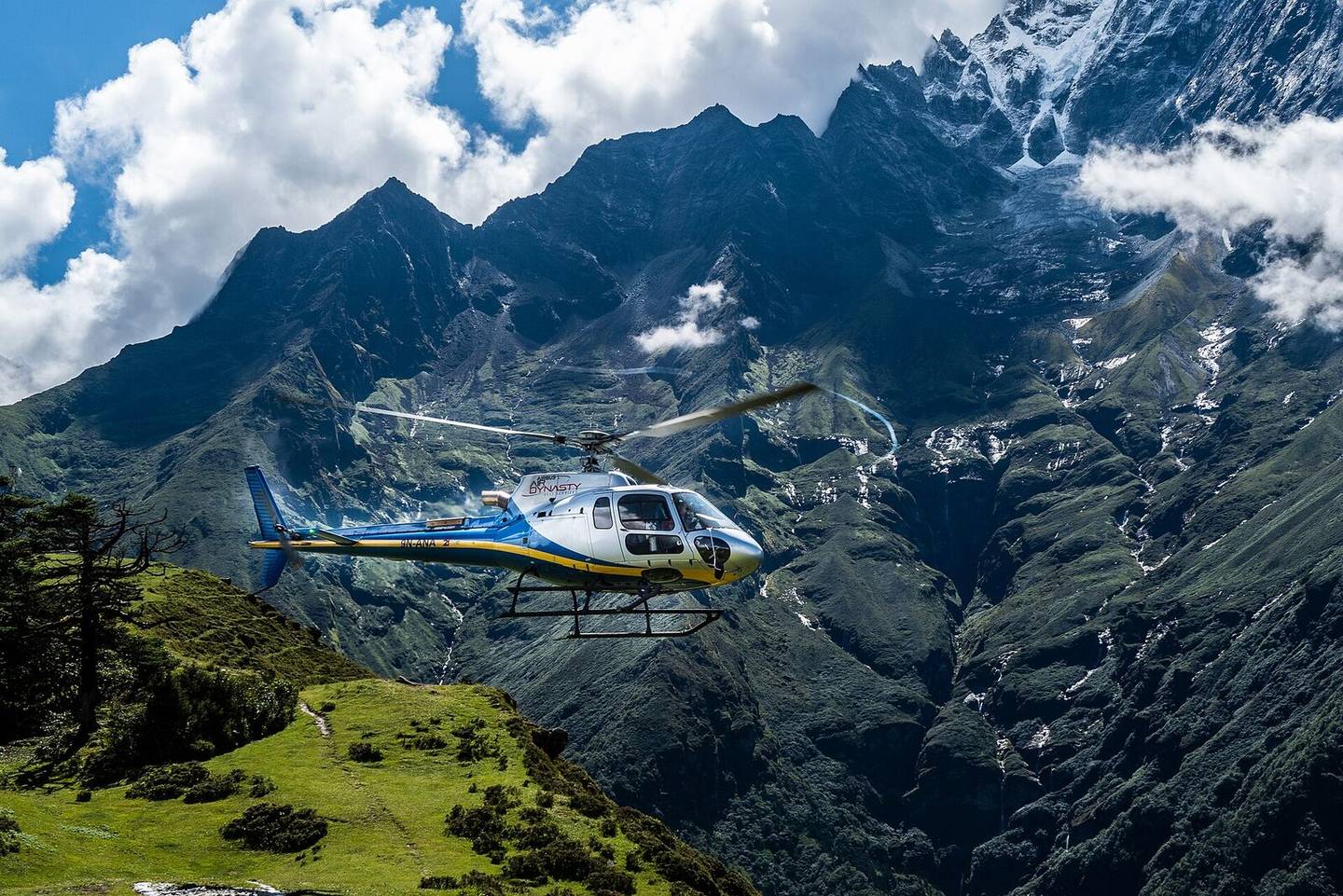
Most people trekking in Nepal carry travel insurance. A striking number of them are carrying a policy that would not pay for the one thing they bought it for.
Two clauses in the policy document decide it: the altitude limit and the evacuation limit. How that flight is dispatched and who pays for it is a separate post; this is how to read your policy before you need it.
| The clause | What to check in your policy | What Nepal actually needs |
|---|---|---|
| Altitude limit | A stated altitude limit, which varies by insurer and plan | At least 5,545 m — Kala Patthar, the high point of a standard Everest trek |
| Evacuation cap | An evacuation limit, and whether helicopter evacuation is named | Tens of thousands, with the words “helicopter evacuation” written in |
| Documentation | What the insurer will ask for after a claim | Medical report, flight record, proof the evacuation was necessary |
An evacuation from the Everest region costs about US$3,000–8,000, and more with a longline and a specialist crew. If you are reading this because somebody is already unwell, go to rescue rather than to your policy.
What altitude does travel insurance exclude in Nepal?
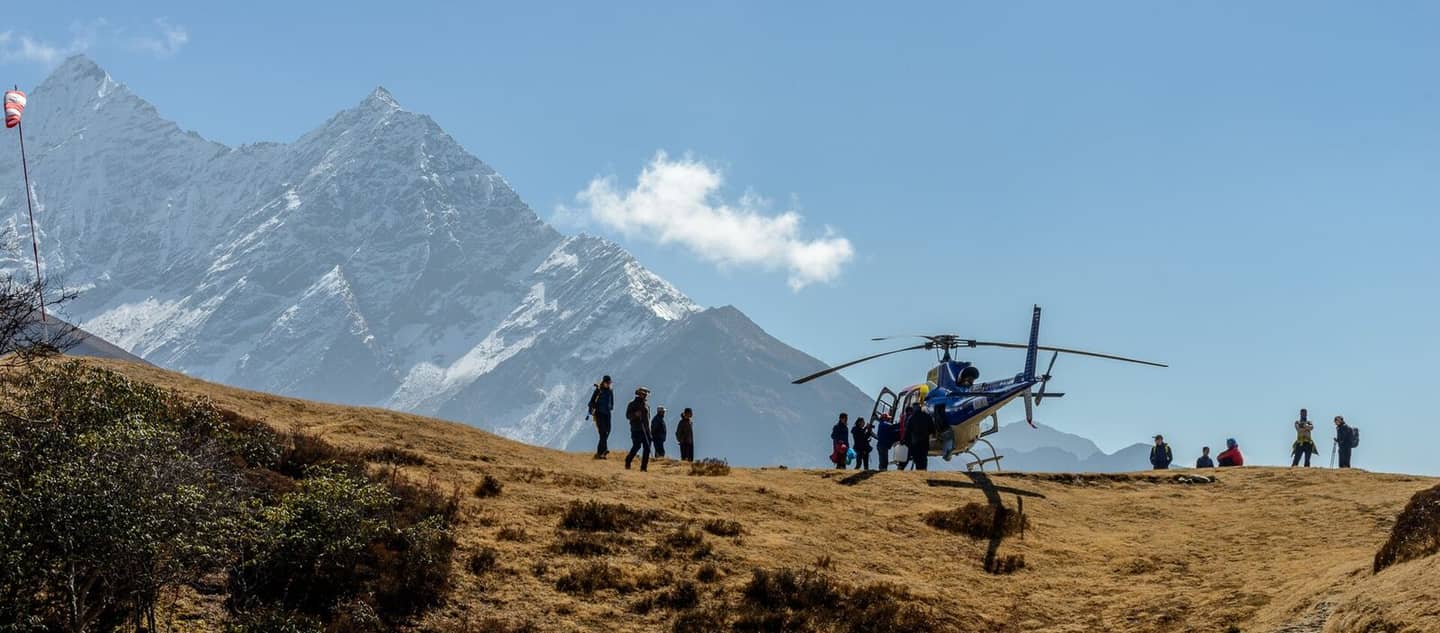
Some policies exclude trekking above a stated altitude, sometimes as low as 3,000 m or 4,000 m, and limits vary by insurer and plan. Everest Base Camp is at 5,364 m. Kala Patthar is 5,545 m. Thorong La on the Annapurna Circuit is 5,416 m.
In other words, the exclusion begins roughly where the interesting half of the trek does. If an insurer applies it, the evacuation and any treatment linked to it may not be covered.
How big does the evacuation cap need to be?
A policy that permits high-altitude trekking may still set an evacuation limit below the real cost, so check the figure rather than assuming it. An evacuation from the Everest region typically costs about US$3,000–8,000, as a guide only, and more if a longline and a specialist crew are needed.
A cap below the real cost is not cover, it is a contribution. Look for an evacuation limit in the tens of thousands and for the words "helicopter evacuation" written explicitly.
Why did insurers get strict about Nepal claims?
A 2018 government investigation in Nepal found evacuation claims that had been inflated, duplicated or fabricated outright. The reforms it recommended were never fully carried out, and in March 2026 Nepal Police charged 32 people over fake and inflated rescue claims. Insurers now look closely at every Nepal evacuation, so expect to be asked for a medical report, a flight record and evidence that the evacuation was medically necessary.
Keep every piece of paper you are handed at the hospital and at the operator's desk. A genuine claim with no documentation is a slow claim.
Where should you keep your policy details while trekking?
Write down the policy number and the assistance company's phone number on paper, and keep them somewhere that does not need a signal or a charged phone.
Most insurers expect their assistance team to be called before an evacuation is arranged, and operators usually ask for that number or a guarantee of payment, so details you can quote at 04:00 are one fewer thing between a casualty and a hospital.
Questions this article answers
What altitude do travel insurance policies usually exclude in Nepal?
Some policies exclude trekking above a stated altitude, sometimes as low as 3,000 m or 4,000 m, and limits vary by insurer and plan. Everest Base Camp is at 5,364 m, Kala Patthar is 5,545 m and Thorong La on the Annapurna Circuit is 5,416 m, so a low limit can stop roughly where the interesting half of the trek begins. If an insurer applies it, the evacuation and any treatment linked to it may not be covered.
How much does a helicopter evacuation from the Everest region cost?
A helicopter evacuation from the Everest region typically costs about US$3,000 to US$8,000, as a guide only, and more if a longline and a specialist crew are required. That is the figure an evacuation limit has to clear to be worth anything.
What evacuation cover limit do you need for trekking in Nepal?
Look for an evacuation limit in the tens of thousands of US dollars, with the words "helicopter evacuation" written explicitly in the policy. A policy that permits high-altitude trekking may still set an evacuation limit below the real cost, and a limit below the real cost is not cover — it is a contribution.
What documentation do insurers require for a Nepal evacuation claim?
Insurers now generally want a medical report, a flight record and evidence that the evacuation was necessary rather than convenient. Insurers have looked hard at Nepal claims since a 2018 government inquiry found fake, duplicated and inflated rescue claims, and in March 2026 police charged 32 people over the same kind of fraud. Keep every piece of paper from the hospital and the operator's desk, because a genuine claim with no documentation is a slow claim.
Should you carry your insurance details on paper when trekking?
Carry your insurance details on paper when trekking in Nepal: write the policy number and the assistance company's phone number down and keep them somewhere that needs no signal and no charged phone. Most insurers expect their assistance team to be called before an evacuation is arranged, and operators usually ask for that number or a guarantee of payment, so details you can quote at 04:00 remove one obstacle between a casualty and a hospital.